2 hours ago
10
2 hours ago
10
Published June 17, 2026 7:00 PM CDT
 article
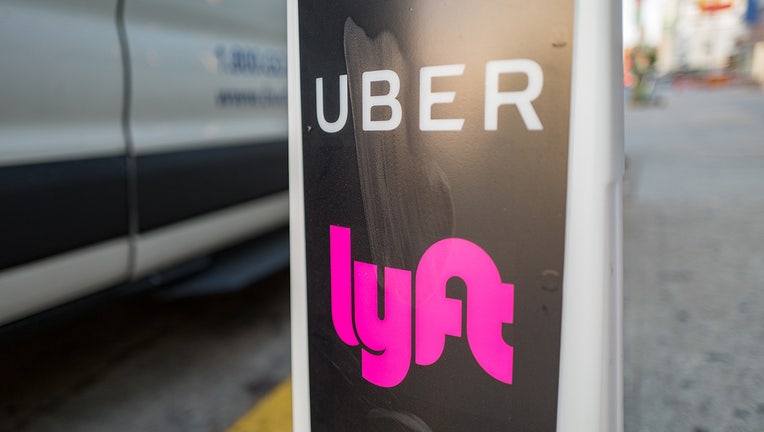
Close-up of vertical sign with logos for ridesharing companies Uber and Lyft, with wheels of a car in the background, indicating a location where rideshare pickups are available in downtown Los Angeles, California, October 24, 2018. (Photo by Smith C
Popular ride-share services Uber and Lyft will charge different customers different rates for the exact same rides, even when they are ordered at the same time, a new Consumer Reports article claims.
Both companies strenuously denied the allegations in detailed responses, each of which laid out how their pricing practices work. Lyft went on to describe price differences based on demand as a feature, not a bug.
Big picture view:
Consumer Reports explained that its investigation used volunteers who would order rides that would take them from the same location to the same destination at roughly the same time, although the review website stated that some ride requests happened in the same minute. It reported finding that the ride-share companies would return different price quotes and said the median difference was around 50 percent.
Uber and Lyft both disputed the report’s foundational supposition that the requested rides were equivalent, noting how quickly their algorithms adjust fares to market conditions, which is the so-called surge pricing the industry is widely known to use. Uber explained its system updates in real-time, while Lyft said two minutes can make a big difference in prices. Uber, the dominant leader in the ride-share marketplace, went on to argue that the way the tests were run made it difficult to know if the requests came at the same time.
What they're saying:
Consumer Reports had contacted Uber and Lyft about their findings prior to publishing their article and noted how the companies disputed how the tests were run and what the findings said about Uber and Lyft’s pricing practices.
"They also challenged our methodology and conclusions and stated that they do not personalize base fares for individual consumers or engage in behavioral or surveillance pricing," Consumer Reports wrote. "CR is not disputing this; rather, it is questioning whether the price differences observed are based only on market forces."
Dig deeper:
Consumer Reports acknowledged several of the factors that were not controlled for in its research, particularly driver supply, differences in estimated arrival times, routing differences, traffic changes, rider location precision, or network latency. It said those data points "were outside the scope of the rider-facing data we collected." Additionally, the website said, its volunteer base was not representative of the U.S. population. It dismissed these issues, saying that it did not believe they would significantly affect the results.
What an expert told CR
Experts who reviewed the data provided by Consumer Reports were surprised by the gaps between prices in the report, despite the fact that they were already expecting to see differences, according to the article.
"The magnitude of the high/low price differentials is astonishing," Len Sherman, an executive-in-residence at Columbia Business School, was quoted as saying. "You controlled for time and supply and demand. So their argument there doesn’t hold up. So what the heck is going on?"
The other side:
In addition to questioning the timing issue of what Consumer Reports described as simultaneous requests, Uber also claimed the article overstated the findings because the data it was presented showed that a majority of the price differences were within single-digit percentage points, a fact it attributed to being a real-time marketplace. Consumer Reports disputed that claim by stating that it saw gaps of more than 5% on all 30 virtual routes.
Uber also echoed Lyft’s point that when more people are requesting rides, fares tend to rise. Lyft noted that when multiple people check a price of a route at the same moment, its system sees that as a surge, which affects the price quoted. Uber offered a similar explanation and stated that the experiment probably played a part in the price differences.
Both companies broke down how they say their prices work. Uber’s explanation is available here, while Lyft can be found here.
The Source: Information for this article was taken from Consumer Reports, Uber, and Lyft. This story was reported from Orlando.
ConsumerBusiness